How to Choose an Organic Chicken Feed
April 22, 2022
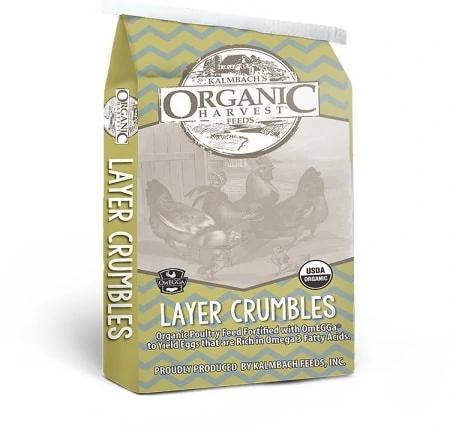
Organic feed costs noticeably more than conventional feed, so it's worth knowing what you're paying for. Here's how to read the bag and pick a good organic ration for your flock.
What "organic" means on a feed bag
In the US, feed labelled USDA Certified Organic must be made from ingredients grown without synthetic pesticides or fertilisers, with no genetically engineered crops and no antibiotics. In the EU and UK, similar rules apply under their own organic schemes. Look for the certification seal, not just words like "natural" or "farm fresh", which have no legal meaning.
"Non-GMO" is a separate claim. A feed can be non-GMO without being organic.
Match the feed to the bird
The most important choice isn't organic versus conventional. It's picking the right type of feed for the age and purpose of your birds.
| Feed type | For | Typical protein |
|---|---|---|
| Starter / starter-grower | chicks from hatch to about 8 weeks | 18 to 20% |
| Grower | pullets from about 8 weeks until laying | 15 to 18% |
| Layer | hens that are laying | about 16% |
| Broiler / meat-bird | meat chickens | 20 to 22% |
Layer feed contains extra calcium (around 3.5 to 4.5%) for strong eggshells. Don't feed it to chicks or young pullets, because too much calcium can damage their kidneys.
What to look for on the label
- Protein in the right range for the bird's age.
- Calcium for layers, plus oyster shell offered separately.
- Methionine and lysine, essential amino acids. Organic feeds often use peas, soy or fish meal to supply them.
- Vitamins and minerals, including a vitamin premix and salt.
- A recent mill date. Feed loses vitamin potency over time. Try to use a bag within about three months of milling.
Crumbles, pellets or mash?
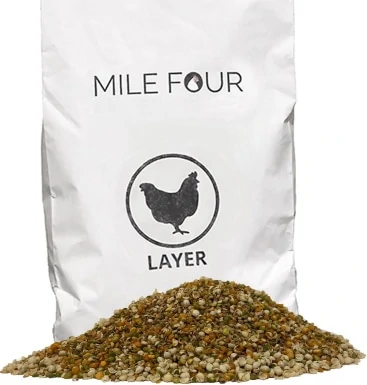
- Crumbles suit chicks and are easy for all ages to eat.
- Pellets waste the least, because birds can't pick out favourite bits.
- Whole-grain or mash blends look appealing but let birds sort out the tasty grains and skip the minerals. Use a feeder that limits picking.
Is organic worth it?
Organic feed won't make an unhealthy hen healthy, and conventional feed won't harm a well-kept flock. Organic makes the most sense if:
- you sell eggs or meat as organic (which requires certified feed and management),
- you want to avoid synthetic pesticide residues in your food chain, or
- you're supporting organic grain farming as a matter of principle.
Getting the most from an expensive bag
- Use a no-waste feeder. Spilled feed is lost money and attracts rodents.
- Store it dry and sealed, in a metal bin with a lid.
- Limit treats to about 10% of the diet so hens eat their balanced feed.
- Let them forage. Grass, bugs and kitchen greens stretch feed and enrich egg yolks.
If you'd like to try mixing your own, see our homemade chicken feed recipes, but read the cautions first.